If your capital isn't large enough, can you not make large trades? Proprietary trading is breaking this limitation.

In the forex market, huge amounts of capital flow every day, exchange rates continue to fluctuate, and trading opportunities keep emerging.
At the same time, traders also need to face two practical problems: capital pressure and risk control.
Under the traditional live trading model, traders usually need to use their own funds to open an account.
The larger the account size, the higher the capital risk to bear; when the capital size is smaller, it may limit the execution space for trading strategies.
To solve this problem, proprietary trading offers another way to trade.
1. Obtain larger-scale trading opportunities with a lower capital threshold
In traditional trading, account size often depends on the trader's own principal. If they want to operate a larger account, it means they need to invest more real funds.
The proprietary trading model changes this. By paying a certain technical service fee and participating in the trading evaluation set by the platform, traders can challenge accounts far larger than their own investment.
For example, at EagleTrader, the first proprietary trading platform in China, traders do not need to prepare tens of thousands of dollars in principal; only a few hundred is enough to challenge accounts of tens of thousands, hundreds of thousands, or even larger sizes, executing their own trading strategies in a simulated real-market environment.
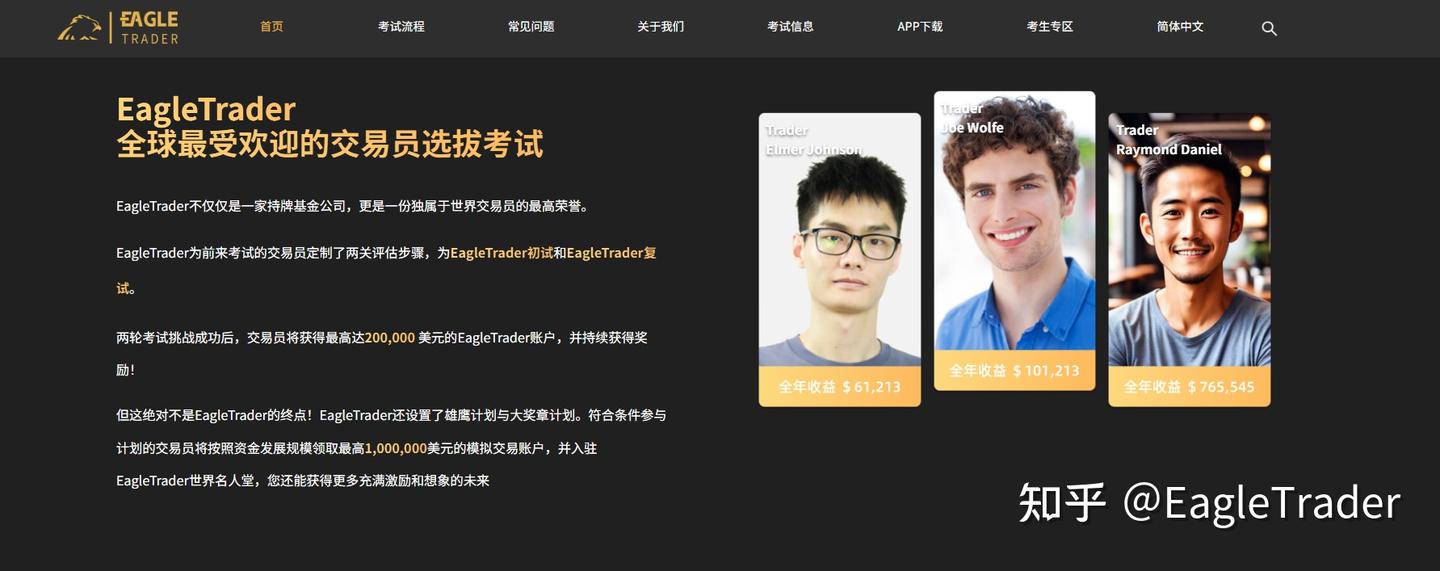
This means using trading capability to strive for larger trading opportunities rather than using more principal to exchange for a larger trading scale.
2. Reduce principal exposure and ease initial capital pressure
For traders who have just entered the market, their skills are not yet mature and their risk control is not yet stable, and of course they do not want to bear excessive pressure from principal losses. If they trade directly in a live account, when the account suffers a large loss, it is their own funds that are lost.
Under the proprietary trading model, traders invest technical service fees rather than the full account funds. Even if they ultimately fail the evaluation, they bear limited participation costs rather than the full capital risk of a large trading account; and for platforms like EagleTrader, all fees will be refunded after passing the evaluation, so the cost traders actually need to spend will be even lower.
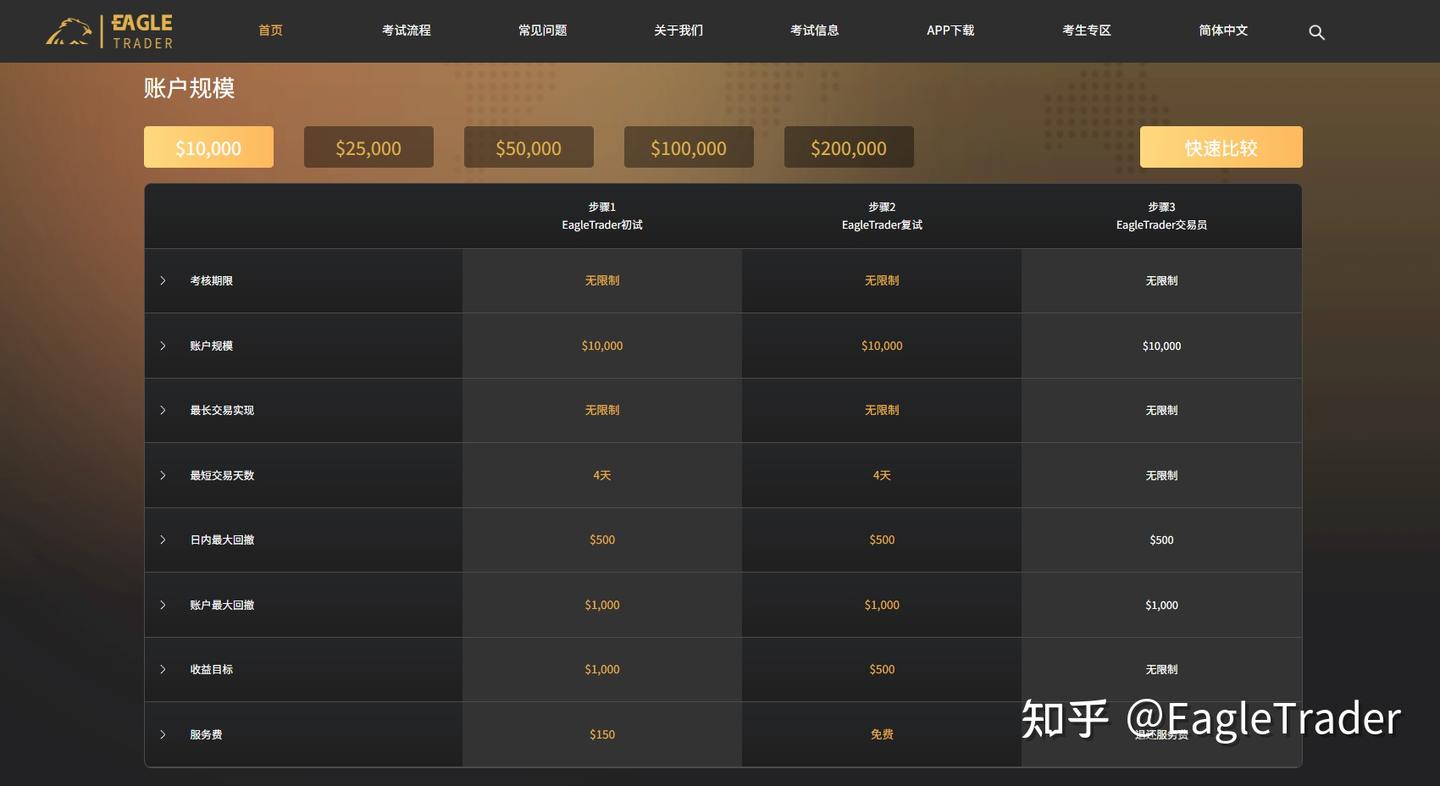
This model allows traders to better test their trading strategies and execution capabilities with more controllable capital investment.
3. A real market environment helps traders improve stability
The biggest difference between simulated trading and real trading lies in the trading environment and psychological pressure.
Many traders can formulate excellent strategies during review, but after entering the real market, they are easily affected by emotions, position size, and risk control.
The proprietary trading evaluation provides a 1:1 replicated real trading environment. Through clear trading rules, such as risk limits and maximum loss requirements, traders need to manage positions and execute strategies more strictly.
Just like learning to drive, under the constraints of certain traffic rules, drivers are safer on the road. Proprietary trading is like giving you a standard for stable trading in advance. Through practice and practical application, traders can learn good trading habits, and even when they truly “drive on the road,” they can survive safely in the market.
4. From pursuing short-term profits to building long-term trading capabilities
Many traders focus on how to find the next market opportunity, but truly excellent traders focus more on:
How to control risk? How to stay stable? How to execute strategies over the long term? The core of the proprietary trading model is not simply to provide an account, but to cultivate traders with stable trading capabilities through an evaluation mechanism.
Traders continuously optimize strategies, improve risk management, and gradually build a trading system that meets market requirements through the challenge process.
EagleTrader proprietary trading provides traders with a trading evaluation environment featuring simulated funds and real market conditions. Through the challenge process, traders can optimize trading strategies, learn trading discipline, and truly complete self-transformation.
After completing the evaluation, traders can also receive account funding support and, according to platform rules, enjoy up to 80% profit sharing. For traders who want to increase trading scale, reduce principal pressure, and build long-term trading capabilities, proprietary trading is a good choice.
Ready to take on EagleTrader Max?
No upfront evaluation stage. Trade immediately once funded, with up to 90% profit split.